Why your Portsmouth website gets no enquiries, and what fixes each cause
A live but silent Portsmouth website usually has three of eight faults: nothing indexed, one page for everything, no district named, slow on a phone.
By Daniel Stoychev, Webso Digital · 30 August 2026 · 4 min read
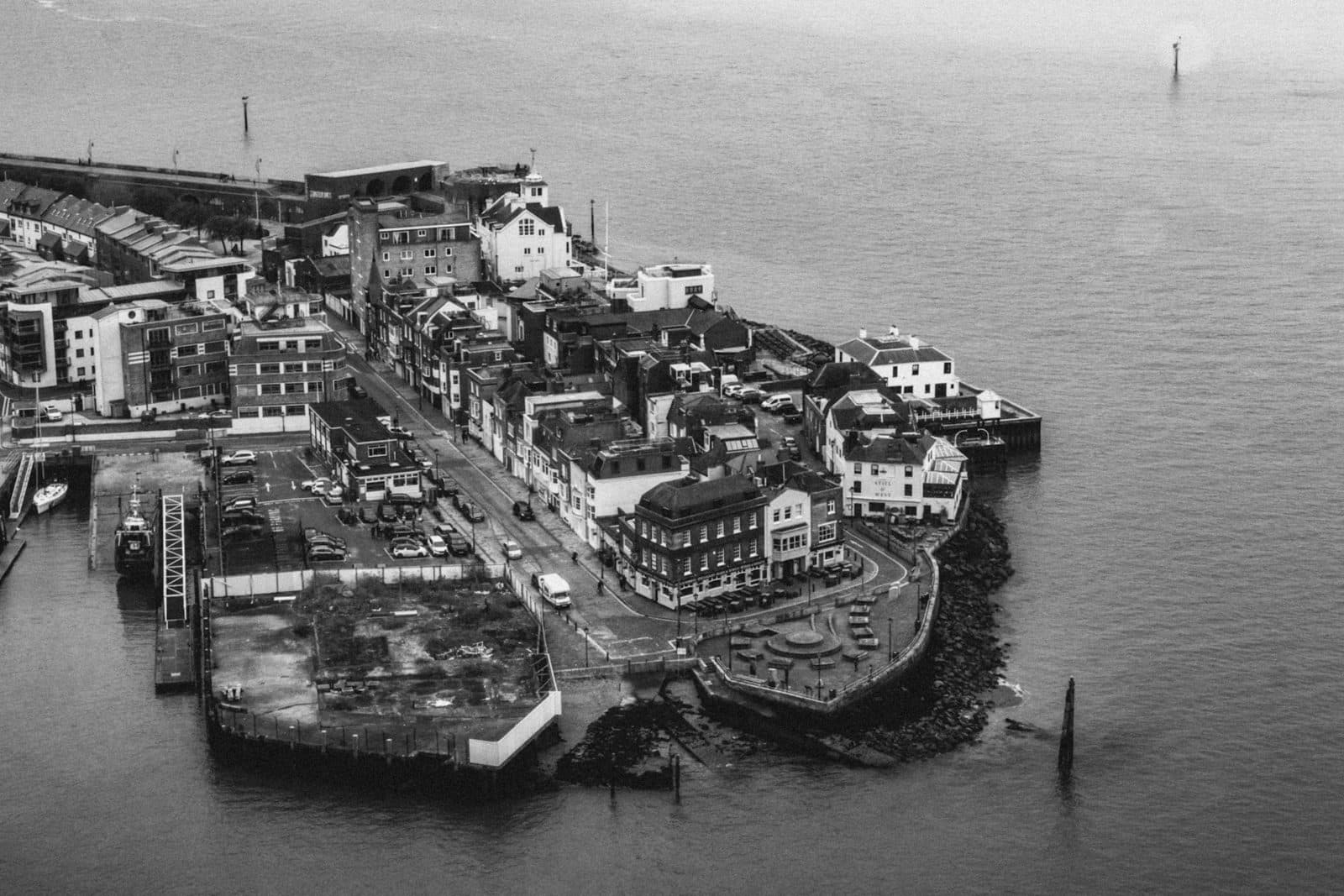
Picture a landlord in Southsea with a boiler that has stopped on a Friday evening. She searches on her phone, taps the first two names in the map, rings one, and has a booking inside four minutes. Your website was live the whole time and never entered the story. Nearly every silent Portsmouth site fails at one of the four moments in that four minutes: the search, the tap, the page or the form. This guide follows her through them, with the check for each and the fix, so you can find your fault in an evening.
Follow the customer, not a checklist
Audits usually hand you forty items with no order. Ours follows the customer, because the fault that comes first in her journey is the one costing you most. If she never sees you in the search, nothing on the page matters. If she sees you but the page takes eight seconds on 4G on Albert Road, the copy never loads. Fix in the order she meets the problems.
The search: are you there at all?
Nothing indexed
Search site:yourdomain.co.uk on Google. If the result is a handful of pages or none, Google has not read the site, and it is usually one of three reasons: a noindex tag left on from the build, a robots file that says keep out, or a site so new and unlinked that Google has not bothered. Search Console shows which. The fix is a morning's work, and until it is done every other fix is invisible.
One page for everything
A single page that mentions boilers, bathrooms, kitchens and emergency call-outs ranks for none of them, because Google has one page to show for boiler repair in Portsmouth and picks the site that gave the subject a page of its own. Count your pages against the searches you want. If there are five searches and one page, that is the fault.
No district anywhere
Portsmouth is not one map. Southsea, Fratton, North End and Cosham are separate centres, and a page that says Portsmouth in the footer and nowhere else is competing in none of them. The district you serve most belongs in the title, the first paragraph and the profile's service area. Not a page per district, which is a different fault; one honest page that names them with distances.
The tap: what happens on her phone
She found you. Now three things decide whether she rings. Speed first: test the site on a phone on mobile data, not on the office Wi-Fi, and if the first screen is not there in three seconds she has gone back to the map. The number second: it must be a tap, not text she has to copy, and it must be the number that gets answered on a Friday evening. Hours third: if the profile says closed at 5pm and the site says 24-hour emergency, one of them is lying to her, and she rings the firm whose two sources agree.
The page: what a stranger needs before she trusts you
A page earns a call when it shows three things a stranger can check: photographs of real jobs with the district named, a rating with a link to the reviews, and the logic of the price even when the price itself depends on the job. Stock photographs of a smiling engineer who has never been to Portsmouth do the opposite of what people think. The page does not need to be long. It needs to be true and checkable.
The form: where enquiries go to die
More sites than you would believe have a form that has not delivered a message in a year. The mail server changed, the address the form points to is an old employee's, or the spam filter eats them. Test yours now: send a message from your phone, wait ten minutes, and if nothing arrives you have found the quietest fault on the list. We test every client form monthly for exactly this reason.
The order matters. A dead form on a site nobody finds costs nothing; the same dead form on a site that ranks costs a job a day. Fix the search first, then the tap, then the page, then the form, and re-test the form every month.
| What you notice | Likely cause | Ten-minute check |
|---|---|---|
| Nothing for your trade, even by name | Not indexed, or noindex left on | site:yourdomain.co.uk; Search Console coverage |
| You appear for the name, never for the trade | One page for everything; no district named | Count pages against searches; read your own title |
| Visits in Analytics, no calls | Slow on a phone; number not tappable; wrong hours | Test on mobile data; tap the number; compare hours with the profile |
| Calls, but no messages ever | Form not delivering | Send yourself a test; check the spam folder and the recipient |
| Profile calls, website silent | Profile links to the wrong page or an old site | Tap the website link on your own profile |
The fix order, in one list
- Get the pages indexed and the noindex or robots block removed.
- Give each service you want more of its own page, and name the districts you serve on one honest areas page.
- Make the site load in under three seconds on a phone, with the number as a tap and the hours matching the profile.
- Put real photographs, the rating with a link and the price logic on each service page.
- Test the form from a phone, then again every month.
Most of this is fixing what you have, not a rebuild. One page for everything and a site that cannot be made fast are the two that sometimes mean starting again, and an honest audit says which you have before anyone quotes for a new site.
Questions on this topic
Can I run these checks myself?
All of them, in an evening, with a phone and the site: search operator, a speed test on mobile data, a tap on the number, a form send. Quence, our free audit tool on the home page, does the technical ones automatically.
My site is on a page builder. Does that matter?
Only if it is the reason it is slow or cannot be edited. Plenty of page-builder sites rank; the fault is usually what is on the page, not the tool. If the builder cannot get you under three seconds on a phone, then it matters.
Is a new site the answer?
Rarely on its own. A new site with the same faults is silent in a new design. Fix the search and the tap first; if the site cannot be fixed, rebuild with the faults designed out.