Gosport, Fareham, Havant, Waterlooville: which places around Portsmouth deserve their own page, and which do not
Portsmouth is an island with a harbour in the way. When a business needs a page for Gosport, Fareham, Havant or Waterlooville, by searches and drive times.
By Daniel Stoychev, Webso Digital · 6 October 2026 · 7 min read
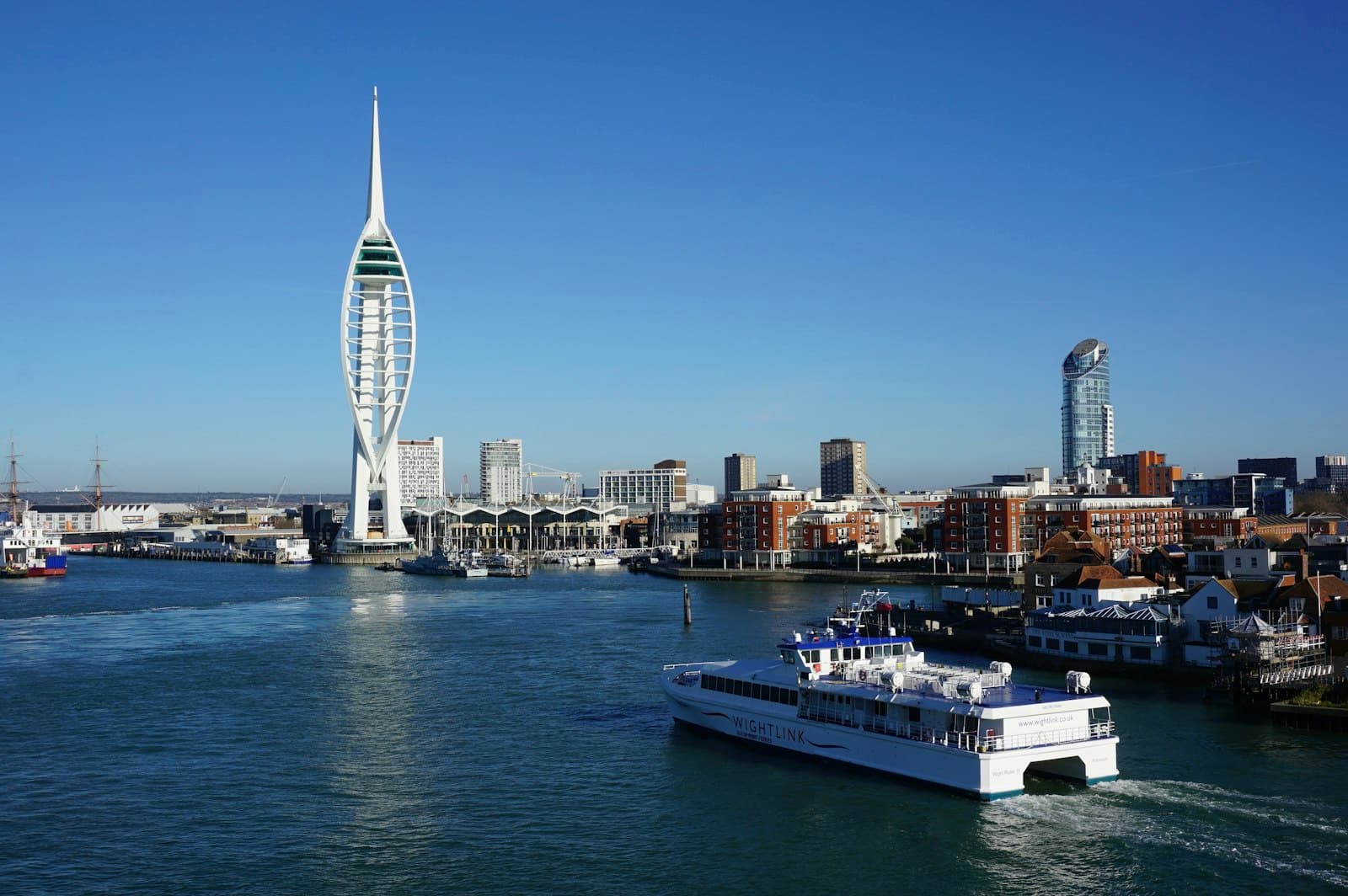
Most of Portsmouth is on an island, and the harbour sits between it and Gosport. Gosport is five minutes away on the ferry and the best part of forty minutes by road around the top of the harbour through Fareham, which is why a Portsmouth plumber who "covers Gosport" is making a promise that depends on whether the job needs a van. That geography, not a keyword tool, is what decides which places deserve a page. The measured searches are small: "seo gosport" about 40 a month, "seo havant" 30, "seo fareham" 20, and the same pattern holds for most trades. A page earns its place when you genuinely work there, when people search for your service with that place name, and when you have something true to say about it. Otherwise it is a line on the service page, and that is enough.
The geography, because it decides more than the keywords
| Place | From Portsea Island | What it usually means for a page |
|---|---|---|
| Southsea, Fratton, North End, Copnor, Milton, Hilsea | On the island; minutes | Districts, not towns. Named on the service pages and in the profile; a page only for a district you are based in |
| Cosham, Drayton, Farlington, Paulsgrove | Over the bridges; ten to twenty minutes | Part of the city. A page rarely needed; the service page should name them |
| Havant, Waterlooville, Emsworth | Fifteen to thirty minutes east and north | A page if you work there weekly and the search exists for your trade; measured small |
| Fareham, Portchester, Titchfield | Twenty to forty minutes west | The same test, with the harbour in the way for anything on the Gosport side |
| Gosport, Lee-on-the-Solent, Stubbington | Five minutes by ferry on foot; thirty to forty by road | A page only if you really serve it with a vehicle, or if the job comes to you (a marine engineer, a clinic) |
The times are the honest planning figures for a working day rather than the best case at six in the morning. They matter because a page that promises Gosport to a customer who then waits an hour for a van earns the review that undoes the page.
The three tests a place has to pass
- You work there. Not "would go there for a big enough job"; you have been there this month, you know which streets have parking and which do not, and you could name a job you did.
- People search for your service with that place name. Google's Keyword Planner gives the number; for most Portsmouth trades the towns around the harbour return tens of searches a month, not hundreds, and a few return nothing at all. Nothing means no page.
- You have something true to say about the place: the route, the kind of houses or boats or businesses, the jobs you have done there, who you compete with. If the page could have any other town's name in it and still read correctly, it is a copy, and Google treats copies as one page and drops the rest.
Open your area pages and swap the town name in your head for the next town along. If every sentence still works, the pages are not about the towns, and that is what Google sees too.
What a page about a place actually contains
The route from where you are to where they are, in a sentence, because it tells the customer how soon you can come. The kinds of work that come from that place, which differ: Gosport sends marine work and retired owners with older houses, Waterlooville sends newer estates and family homes, Havant sends a mix with industrial units on the edge. Two or three jobs you did there, with what they were and roughly what they cost if you publish prices. The landmarks a local would use, and nothing a tourist board would. And the review from a customer in that place, because that is the proof the page exists for.
The profile does most of this without a page
A Google Business Profile carries a service area, and for a trade the service area is where most of the local work comes from. Set it to the places you actually cover, list every service, and let the map do the job of twelve thin pages. The profile shows for "plumber near me" in Havant whether or not you have a Havant page; what it cannot do is answer the specific question, which is what the page is for when the search exists.
Two Portsmouth examples, worked through
A mobile mechanic based in Copnor with a van: Gosport fails the first test on most days, because forty minutes each way around the harbour turns a one-hour job into a half-day, and the honest service area ends at Fareham. Havant and Waterlooville pass all three tests if the mechanic is there every week, the searches exist for "mobile mechanic Havant", and there is something true to say about the estates and the parking. Two pages, written about those two places, and a sentence on the service page for the rest.
A physiotherapy clinic in Southsea: the customer comes to the clinic, so the harbour is not in the way, and a Gosport page makes sense if Gosport patients come on the ferry and the searches exist, which for "physio Gosport" they do. The page says how to get there from the ferry, how long it takes, and where to park on the Southsea side. Same city, same harbour, opposite answer, because the test is about the customer's journey, not the business's ambition.
What we did on this site
This site has one areas page, not a page per town, because the measured search for an SEO agency with a town name around Portsmouth is tens a month and the honest answer to "do you cover Fareham" is a sentence. If a town's searches grow in Search Console, it gets a page then, written about that town. That is the rule we apply to clients and it is the rule we apply to ourselves.
Questions on this topic
Should a Portsmouth business have a page for Gosport?
Only if you really serve it with a vehicle, or if the customer comes to you. On foot it is five minutes by ferry; by road it is thirty to forty minutes around the harbour, and a page that promises Gosport to a van-based trade promises a wait.
How many searches do the towns around Portsmouth get?
For most services, tens a month: seo gosport about 40, seo havant 30, seo fareham 20 in Google's Keyword Planner. Trades vary, and some town-and-service pairs return nothing, which means no page.
Is a page per town bad for SEO?
A page per town with the name swapped is. Google treats near-copies as one page and drops the rest, and on a new site that can take other pages with it. A page per town you genuinely work in, written about that town, is fine and earns.
Do the Portsmouth districts need pages?
Southsea, Fratton, North End, Copnor and the rest are districts of one city. Name them on the service pages and in the profile. A page only for the district you are based in, if there is a reason to write it.
What should the areas page say if there are no town pages?
Where you work, how far, how soon, in plain sentences, with the places named so Google can read them. This site's areas page is written that way for the same reason.